The National Dredging Museum is currently housed in two listed villas on the Molendijk in Sliedrecht. This location and these buildings underscore Sliedrecht's historical connection to the dredging industry. However, the monumental buildings and subsequent extensions offer insufficient space for the extensive collection of 22,000 objects and limit the ambition to increase visitor numbers in the future.
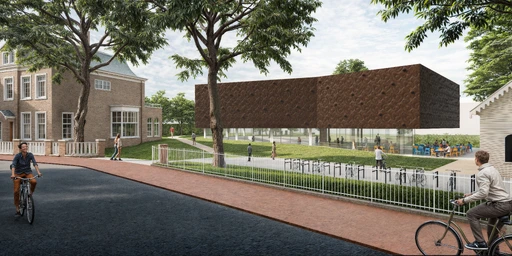
This ambition calls for more space, a new building, and a new name: Lab Delta. Studio Marco Vermeulen created a design in which the monumental villas are restored to their former glory and the collection is housed in a new building. In this way, the historic buildings regain their space, and their heritage value becomes legible once again. At the same time, space is created for a new building with an expressive facade that marks the future of the museum.
This ambition calls for more space, a new building, and a new name: Lab Delta. Studio Marco Vermeulen created a design in which the monumental villas are restored to their former glory and the collection is housed in a new building. In this way, the historic buildings regain their space, and their heritage value becomes legible once again. At the same time, space is created for a new building with an expressive facade that marks the future of the museum.
2025
Nationaal Baggermuseum
×
Space for National Monuments
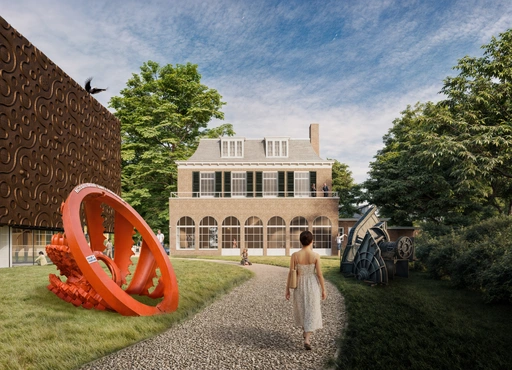
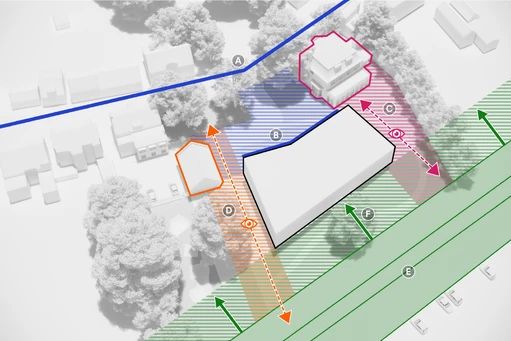
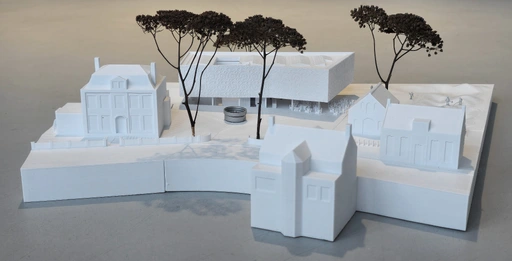
The starting point is that the ensemble of national monuments (Molendijk 204, 208, the coach house, and Molendijk 181 on the opposite side of the dike) is once again ‘legible’. To achieve this, the current extension of the museum will be demolished, so that the historic Volker villa at Molendijk 204 stands free again. The monumental facade and conservatory will become fully visible once more, and the architectural details and historical elegance will be much better showcased. The visitor can experience the villa as a cultural-historical, national monument building.
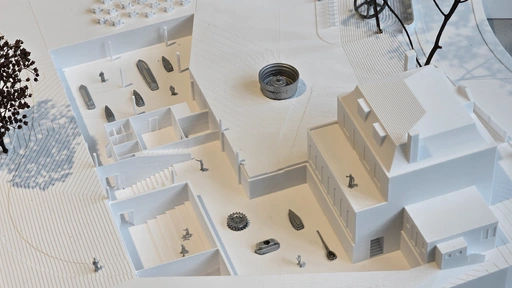
To ensure the villa is accessible from the new building, we have chosen a surprising solution: an underground connection. Via the basement of the new building, the visitor enters this ‘nursery’ of the hydraulic engineering industry. The villa also provides space for contemporary hydraulic engineers and other ‘Delta builders’ to exchange ideas with one another, following in Volker’s footsteps, about the future of the Delta and the role of the hydraulic engineering sector. The extensive hydraulic engineering archive and a reading room will also be housed here.
To ensure the villa is accessible from the new building, we have chosen a surprising solution: an underground connection. Via the basement of the new building, the visitor enters this ‘nursery’ of the hydraulic engineering industry. The villa also provides space for contemporary hydraulic engineers and other ‘Delta builders’ to exchange ideas with one another, following in Volker’s footsteps, about the future of the Delta and the role of the hydraulic engineering sector. The extensive hydraulic engineering archive and a reading room will also be housed here.
Collection Building
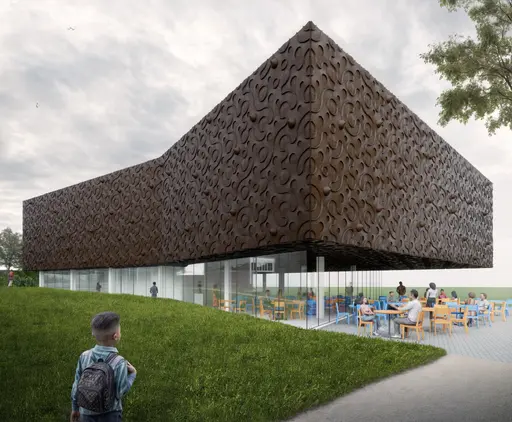
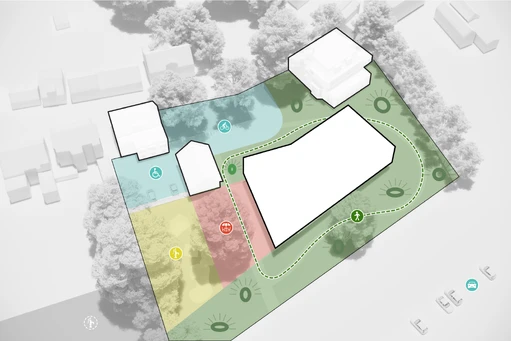
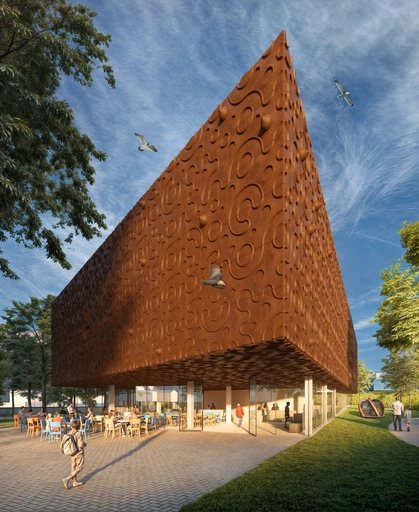
Space has been created in the new extension for the extensive museum collection, featuring special models and monumental scale models: an expressive and recognizable centerpiece on the site. A closed volume that appears to float above the landscape thanks to the large windows at the base. Around the building, the ground level undulates at varying heights, forming the museum garden, where visitors view enormous cutter heads and other hydraulic engineering tools. This forms a natural extension of the museum experience.
The facade of Lab Delta is more than just a protective shell: it is a surface full of life, where technology, material innovation, and ecology come together.
Natural Facade
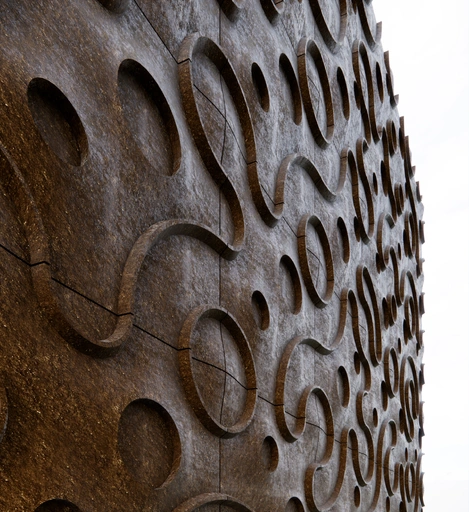
The pattern of the biocomposite facade panels subtly references the tracks left by dredging machines on the river and seabed. The dynamic interplay of lines depicts dynamism and movement, evoking images of dikes and excavation work—the DNA of the industry. They provide architectural expression to the central theme of the museum: hydraulic engineering. The color of the facade refers to earth and sand, key raw materials of the dredging industry.
The facade panels can be rotated as desired; the pattern changes with the orientation of the panels, enabling countless unique compositions. Nesting boxes for birds, bats, and insects can be placed in the circular recesses. Depending on the orientation of the facade, a specific type of box is used, tailored to local species requiring extra protection. This creates a facade teeming with life, where technology, material innovation, and ecology come together.
The facade panels are made from natural fibers and a 100% bio-based resin. This material is lightweight, strong, and exceptionally durable, and distinguishes itself by its fire safety: a rare property within bio-based construction. Moreover, old panels can be reused as raw material for new ones.
The facade panels can be rotated as desired; the pattern changes with the orientation of the panels, enabling countless unique compositions. Nesting boxes for birds, bats, and insects can be placed in the circular recesses. Depending on the orientation of the facade, a specific type of box is used, tailored to local species requiring extra protection. This creates a facade teeming with life, where technology, material innovation, and ecology come together.
The facade panels are made from natural fibers and a 100% bio-based resin. This material is lightweight, strong, and exceptionally durable, and distinguishes itself by its fire safety: a rare property within bio-based construction. Moreover, old panels can be reused as raw material for new ones.
Entrance and Stairwell
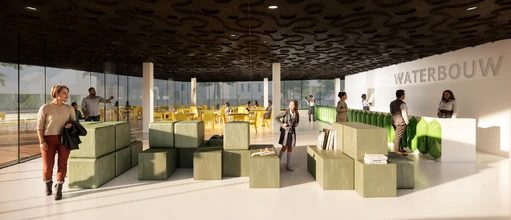
Upon entering the museum, visitors step into an open and inviting reception area featuring the reception desk, museum shop, and restaurant. Together, they form a lively place where the visit begins. Large glass panels surrounding the building create a strong connection with the landscape, allowing the interior and exterior to flow seamlessly into one another and enabling daylight to penetrate deep into the building.
The facade material extends into the ceiling of the entrance. Here, the museum appears to float above ground level like a powerful volume. Cutting through this dark volume in a theatrical manner is the light-colored stairwell, which serves as the beating heart of the new building. Here, visitors move between the different parts of the building. It is a place of orientation and meeting, where people can pause briefly on the wide steps.
The stairwell serves as a kind of public square, and visitors can choose a theme or time period here. With powerful storylines and space for temporary exhibitions, the content can still go in any direction.
The facade material extends into the ceiling of the entrance. Here, the museum appears to float above ground level like a powerful volume. Cutting through this dark volume in a theatrical manner is the light-colored stairwell, which serves as the beating heart of the new building. Here, visitors move between the different parts of the building. It is a place of orientation and meeting, where people can pause briefly on the wide steps.
The stairwell serves as a kind of public square, and visitors can choose a theme or time period here. With powerful storylines and space for temporary exhibitions, the content can still go in any direction.
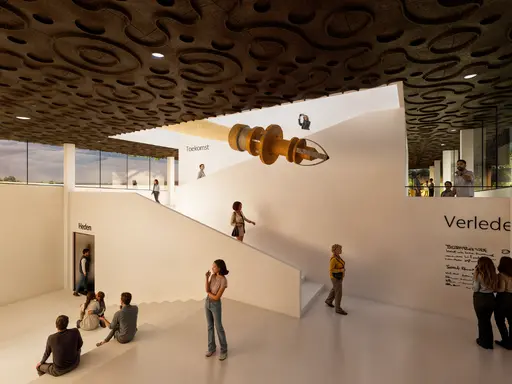
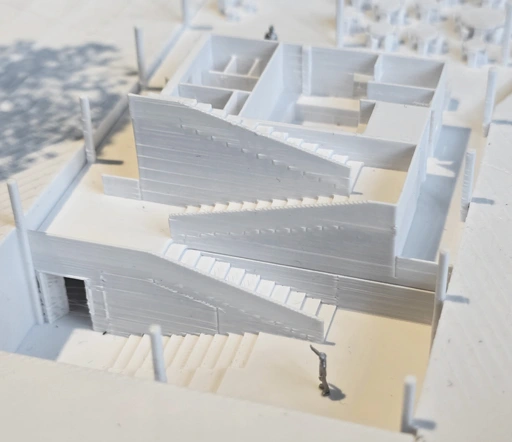
The white walls and abundant daylight create an open and museum-like atmosphere that allows the heart of the building to breathe. Visitors slowly move upwards via a gently zigzagging staircase, guided by the increasingly strong light from above.
Undulating ground level and split level

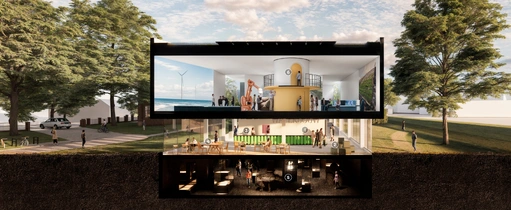
The undulating ground level rises from the entrance towards the monumental villa. As a result, as a visitor, you move further and further underground as you enter the museum. The interplay of elevation differences, split levels, and the gradually rising ground level makes the museum experience exciting and layered. At the same time, it refers to the landscape-shaping capacity of the hydraulic engineering industry.
The interplay of elevation differences, split levels, and the gradually rising ground level makes the museum experience exciting and layered. At the same time, it refers to the landscape-shaping capacity of the hydraulic engineering industry.
The interplay of elevation differences, split levels, and the gradually rising ground level makes the museum experience exciting and layered. At the same time, it refers to the landscape-shaping capacity of the hydraulic engineering industry.
Past and Present
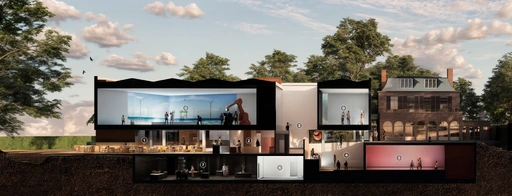
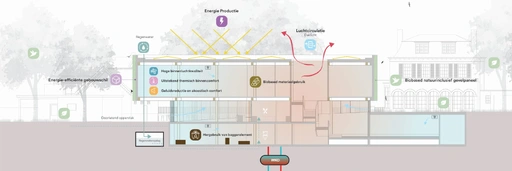
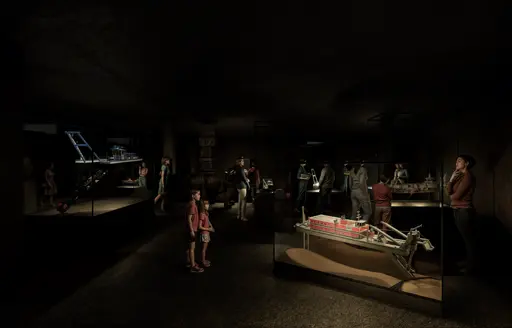
The museum visit begins with a descent into the basement, where visitors literally dive into the past of the Dutch dredging industry. In the first exhibition space, which forms the link between the historic villa and the new museum building, the story of centuries of hydraulic engineering knowledge and daring comes to life. In the basement, models from the collection shine alongside impressive machines and innovative techniques, demonstrating how the Netherlands continues to lead the way in hydraulic engineering.
In the film room, short films take the audience on a journey through spectacular dredging projects, human stories, and visual perspectives on the future of hydraulic engineering.
In the film room, short films take the audience on a journey through spectacular dredging projects, human stories, and visual perspectives on the future of hydraulic engineering.
Hydraulic Engineering of the Future
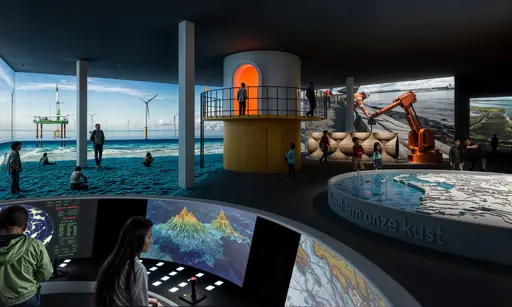
After a journey through the past, the route ascends to the top floor, where the future of hydraulic engineering takes center stage. Here, visitors are immersed in innovation and imagination. Life-sized wind turbines, control rooms, and an impressive scale model of the Netherlands demonstrate how hydraulic engineering is evolving and how this influences the layout of the Netherlands and the world.
The rotating exhibition also features exhibitions on current themes and collaborations with companies, designers, and researchers.
The rotating exhibition also features exhibitions on current themes and collaborations with companies, designers, and researchers.